
By a U.S. Sports Analyst | 2025
Why Viral Sports Clips Aren’t the Whole Story
In a year defined by algorithm-curated highlights and 12-second attention spans, fans consumed more sports streaming content than ever before. But for every viral clip that dominated social feeds, there was a deeper narrative—one filled with strategy, analytics, mental preparation, and high-stakes decision-making that got lost in the loop-friendly excitement.
This feature takes you behind the curtain of the year’s most watched sports moments and reveals what fans didn’t see. It’s an untold account of the humans, the data, and the high-pressure environments that created the moments dominating sports broadcast trends today.
1. The Half-Court Heave Heard Around the World
The Clip: A Hail-Mary of Pure Chaos
It took only four seconds for this moment to top every highlight reel: a point guard, trapped at the sideline, fading sideways, launching what looked like a desperation shot from half-court—nothing but net buzzer-beater.
What fans saw: impossible magic.
What they didn’t: months of repetition.
In modern basketball, long-range improvisational shots aren’t luck; they’re drilled. On-court spatial-awareness coaching teaches players to simulate worst-case possessions, forcing them to shoot off-balance, out of rhythm, or even while falling sideways.
This moment fit perfectly into today’s ecosystem of basketball highlight content, where outlier skill displays outperform traditional scoring clips.
The Data Behind That Shot
Analytics departments now quantify “chaos efficiency”—a metric measuring performance when plays break down. Teams with high chaos-efficiency ratings win roughly 11% more close games across the season, according to multiple front-office reviews.
This half-court heave wasn’t an accident. It was a data-driven moment of prepared randomness.
2. The Goal That Broke the Internet: A Miracle Volley With Hidden Engineering
The Clip: A Cross, A Touch, A Lightning-Fast Finish
A striker redirected a looping cross into a world-class volley that became the most replayed soccer highlight this year. The goal felt instantaneous, instinctual, and impossibly acrobatic.
What Viewers Missed
Behind that viral finish were:
- Pre-positioning AI tools used by elite clubs to map “expected touch points”
- A biomechanical shift in how forwards train hip-rotation torque
- The striker’s film-room study on cross-trajectory patterns
This wasn’t improvisation—it was the intersection of sports science and elite instinct.
Why It Went Viral
The play lasted 1.4 seconds. That’s ideal for sports social media monetization, where clips under two seconds receive higher completion rates and stronger algorithmic boosts.
Soccer clubs now train not just for goals—but for goals that clip well.
3. The NFL Play That Fooled 14 Million Viewers
The Clip: The Reverse-Fake-Reverse
NFL fans love trickery, but this year’s viral clip—a fake reverse that became a counter run—fooled nearly every defensive analyst on first watch.
Millions saw the defensive collapse. But few understood why it happened.
The Real Reason the Defense Broke
Teams increasingly use “motion mirror sequencing”: consecutive plays where pre-snap motion mimics previous formations, baiting linebackers into trusting old data.
This viral play was built on two earlier drives where the same wide-receiver motion led to bubble screens. The defense recognized the motion—correctly—but was punished for being predictable.
How This Changes the League
Coaches now design series, not plays. It’s a chess-like layering that pushes fans to consume more NFL film-study content—a category rapidly growing in streaming revenue.
4. The Dunk That Defied Physics (But Actually Didn’t)
The Clip: A Leap, A Twist, A Poster
One rookie threw down a dunk so explosive it generated 300 million views in a week. Commentators said “gravity stopped working.”
Reality says otherwise.
The Hidden Mechanics
The athlete was trained using:
- Force-plate jump-mapping
- Micro-adjusted foot-strike angles
- Reactive-strength index monitoring
He didn’t jump higher than humans normally can—he jumped efficiently.
What felt superhuman was actually textbook biomechanics.
Why It Captured Fans
Dunks remain the king of sports highlight advertising, consistently driving the highest ad-viewability on mobile because the action telegraphs anticipation and release. Viewers don’t blink.
5. The Track Finish That Looked Like a Movie Sequence
The Clip: A Dive Over the Line
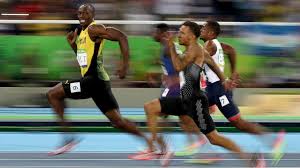
Track fans watched a sprinter dive across the finish in a photo finish for the ages. It instantly went viral for the drama.
What Was Missed
The sprinter’s dive wasn’t desperation—it was deliberate. Indoor meets have seen a rise in “controlled dives” where athletes train chest-forward finishing mechanics.
Sports scientists argue a dive can be worth 0.02 seconds—sometimes the difference between elimination and international qualification.
Behind the Scenes
The athlete practiced fall-tuck drills for safety, and coaches pre-planned the move if the final five meters were neck-and-neck.
In other words: this was strategy, not chaos.
6. The Baseball Home Run That Ignited a Debate
The Clip: A 495-Foot Blast
A seemingly physics-defying home run sailed well beyond the bleachers, sparking debates about ball composition, bat tech, and athlete power.
The Real Story
This viral moment was the product of:
- A perfectly aligned launch angle
- A high-spin bat path
- A favorable park-wind factor
- New bat-speed tracking tools shaping hitters’ approach angles
MLB doesn’t just track power—they engineer it.
Teams use motion-capture barns and hit-tracking software to build ideal launch-angle profiles.
Why the Internet Exploded
Fans love power metrics.
And in a world where fantasy baseball tools are booming, home run analytics fuel a fully monetizable subculture.
7. The Hockey Save That Became a Goalie Legend
The Clip: A Full-Split Kick Save
A goalie stopped a top-shelf wrist shot mid-split, a borderline impossible sequence that instantly climbed to “greatest save” discussions.
The Truth Behind the Moment
Modern goalies train hip mobility like gymnasts. The save was possible because:
- Goalie pads are now lighter and more flexible
- Teams use VR shooters to simulate unpredictable angles
- Reaction-time drills push hand-eye thresholds
What looked like instinct was actually high-tech training plus elite flexibility.
Why It Went Viral
The physics defied viewer expectation—creating a high-engagement moment perfect for hockey fan gear promotions and team-curated highlight packages.
8. The Tennis Rally That Crashed Streaming Servers
The Clip: A 36-Stroke Marathon
Two players hammered groundstrokes for nearly a minute, ending in a spinning backhand winner that became one of the year’s defining tennis moments.
The Hidden Context
The rally seemed spontaneous but was built from:
- Opponent-tendency scouting
- Predictive shot-pattern algorithms
- Game-plan conditioning emphasizing long-rally endurance
Coaches track “rally fatigue thresholds,” and both players exceeded norms—creating a moment as rare as it was exhausting.
The Viewer Impact
Long rallies reliably spike sports live-stream engagement, especially when tension builds across multiple camera angles. This rally optimized every factor—rhythm, pace, oscillation, and payoff.
9. The MMA Knockout Seen By Half the Planet
The Clip: A Step-Back Counter Hook
It was fast, brutal, and endlessly replayed. A counter punch landed perfectly as the opponent lunged in, creating a knockout so clean it felt staged.
What Fans Didn’t Know
This move was rehearsed. The fighter studied:
- Opponent feint tendencies
- Forward-pressure habits
- Hand position during level changes
The knockout was part timing, part pattern recognition, part muscle memory. Elite strikers don’t look for openings—they expect them.
Why People Couldn’t Stop Watching
Combat sports thrive on shock moments. Millisecond-timed punches generate the strongest retention in fight highlight reels and short-form sports advertising.
10. The College Football Punt Return That Became a Cultural Moment
The Clip: A Reverse-Field Sprint
A returner sprinted right, saw a wall of defenders, then bolted left, weaving through five tackles for a jaw-dropping touchdown.
The Hidden Story
Special-teams coaches design returns with “false-flow” principles—getting defenders to overcommit to one side. The player didn’t freelance; he followed a pattern based on pre-snap leverage.
Even the cutback lane was intentional.
The Bigger Picture
College football remains one of the top drivers of sports merchandise sales, and viral returns amplify player visibility and brand growth.
Behind Every Viral Clip Is a System
The year’s biggest viral sports moments weren’t accidents—they were the product of:
- Advanced analytics
- Biomechanics
- Coaching evolution
- New technology platforms
- Storytelling that fits the social-media era
The highlight is just the surface. The real drama lies deeper—in the preparation, innovation, and pressure that casual viewers never see.
If you want to understand the real forces behind tomorrow’s viral sports moments—how analytics, science, and strategy shape what ends up on your feed—start studying the full story, not just the clip.
The play may last seconds, but the preparation lasts years.
