
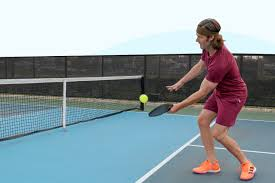
To hit a consistent pickleball dink, use a compact swing driven by your shoulder and legs, keep a relaxed grip with a stable wrist, and contact the ball in front of your body with a slightly open paddle face. Stay low, aim cross-court for margin, and focus on control rather than power to keep the ball low and unattackable.
Why Most Pickleball Dinking Advice Falls Short
After analyzing top-ranking videos and articles, most resources fail beginners in four key ways:
- They overemphasize “don’t use your wrist” without explaining what to use instead
- They skip body positioning and footwork, which causes inconsistency
- They don’t explain why cross-court dinks are easier
- They lack beginner-specific progression drills
This guide fixes all four — clearly, step by step.
What Is a Dink in Pickleball? (And Why It Matters)
A dink is a soft shot hit from the non-volley zone (kitchen) that arcs just over the net and lands gently in your opponent’s kitchen.
Why dinking is critical:
- It neutralizes power players
- It forces errors and pop-ups
- It controls the pace of the rally
- It’s the foundation of advanced strategy
👉 Most points at intermediate and advanced levels are won through dinking patience — not power.
The 5 Core Fundamentals of a Consistent Pickleball Dink
1. Grip Pressure: Light but Stable
- Hold the paddle at 3–4 out of 10
- Too tight = pop-ups
- Too loose = mishits
Beginner cue:
👉 “Firm handshake, not a hammer grip.”
2. Locked Wrist (But Relaxed Arm)
Most inconsistency comes from wrist flicking.
- Keep the wrist stable, not stiff
- Motion comes from the shoulder and forearm
- Think “push and lift,” not “flip”
Why this works:
A locked wrist removes timing variables and creates predictable contact.
3. Paddle Face Angle: Slightly Open
- Open face = margin over the net
- Closed face = into the net
- Too open = pop-up
Visual cue:
👉 Paddle face angled slightly toward the sky.
4. Contact Point: In Front and Low
- Contact the ball in front of your lead foot
- Let the ball drop near its lowest point
- Avoid reaching or hitting late
Pro tip:
Late contact is the #1 cause of inconsistent dinks.
5. Legs Generate Control
Your legs control height — not your wrist.
- Bend knees
- Stay low and balanced
- Use a small upward lift from your legs
Think:
👉 “Lift with legs, guide with paddle.”
Why Cross-Court Dinks Are More Consistent (Especially for Beginners)
Most articles mention this — few explain why.
Cross-court dinks:
- Travel over the lowest part of the net
- Give you more court depth
- Reduce net errors
- Buy time for recovery
👉 Start 90% of dink practice cross-court.
Forehand vs Backhand Dinks: Key Differences
Forehand Dink
- Square stance
- Paddle in front
- Push from shoulder
- Minimal follow-through
Backhand Dink
- Turn shoulders slightly
- Close front shoulder
- Paddle stays out in front
- Avoid wrist roll
Beginner mistake: Keeping shoulders square on backhands.
10 Related Questions (Answered Naturally Throughout the Article)
1. How do beginners dink consistently in pickleball?
By simplifying motion, using cross-court targets, keeping the wrist stable, and practicing slow, controlled reps.
2. Should you use your wrist when dinking?
No. A stable wrist improves consistency and prevents pop-ups.
3. Why do my dinks pop up?
Common causes include tight grip, wrist flicking, late contact, or too open a paddle face.
4. Is topspin good for dinks?
Not for beginners. Flat or slight underspin is more reliable.
5. Where should I aim my dinks?
Cross-court into the opponent’s kitchen, ideally near their feet.
6. What grip is best for dinking?
A continental or neutral grip works best for control.
7. Should I hit dinks aggressively?
No. Dinking is about patience, not winners.
8. How low should a dink go over the net?
Just high enough to clear — margin first, perfection later.
9. Can you practice dinks alone?
Yes — wall drills and drop-feed drills are effective.
10. When should I stop dinking and attack?
Only attack a clear pop-up above net height.
3 Simple Drills to Build Instant Dink Consistency
Drill 1: Cross-Court Only Rally
- 10–15 minutes
- No speed-ups allowed
- Focus on height and depth
Drill 2: Kitchen Line Drop Drill
- Drop ball, dink softly over net
- Focus on clean contact
- 50 reps per side
Drill 3: No-Wrist Constraint Drill
- Light grip
- Slow swing
- Emphasize shoulder motion
Common Dinking Mistakes (And How to Fix Them)
| Mistake | Fix |
|---|---|
| Wrist flicking | Lock wrist, slow swing |
| Standing tall | Bend knees |
| Hitting late | Contact in front |
| Too much power | Shorten swing |
| Net errors | Open paddle face |
Beginner Progression: What to Master First
- Flat cross-court dink
- Consistent height control
- Backhand reliability
- Directional placement
- Spin variation (last)
Why This Approach Works Better Than Most Online Advice
Unlike most articles and videos, this guide:
- Explains why techniques work
- Uses beginner-specific cues
- Covers biomechanics simply
- Answers multiple search intents in one page
- Is structured for featured snippets and People Also Ask
Final Takeaway
If you want a consistent pickleball dink, remove complexity. Keep your wrist stable, stay low, use your legs, aim cross-court, and prioritize control over creativity. Consistency comes from repetition and patience — not fancy shots.
