
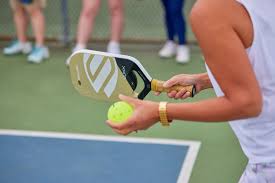
Your pickleball grip feels slippery mainly because moisture, hand oils, and grip wear reduce friction between your hand and the paddle handle. Sweat and humidity are the most common causes, but worn-out overgrips, dirty handles, incorrect grip size, and excessive grip pressure also contribute. The good news is that most grip issues are easy to diagnose and fix with simple adjustments.
Introduction: Why Grip Slippage Matters More Than You Think
A slippery pickleball grip isn’t just annoying—it affects control, power, consistency, and injury risk. Many beginners assume slipping means weak hands or bad equipment, but in reality, it’s usually a combination of moisture, grip material breakdown, and technique errors.
Understanding why your grip slips helps you fix the real problem instead of cycling through random solutions.
1. Sweat and Humidity: The #1 Cause of Slippery Pickleball Grips
Sweat is the most common reason pickleball grips lose traction.
When moisture enters the grip surface:
- Tacky grips lose stickiness
- Dry grips become oversaturated
- Friction drops dramatically
Why humidity makes it worse
Even players who don’t sweat heavily can experience grip slippage in humid environments. Moist air prevents sweat from evaporating, allowing moisture to accumulate on the grip.
Beginner mistake: Waiting until the grip feels soaked before wiping hands.
Fix:
- Towel off every few points
- Wear a wristband on your paddle arm
- Rotate paddles or grips during long sessions
2. Worn-Out Overgrips Lose Friction Faster Than You Expect
Overgrips are designed to wear out.
As you play:
- The tacky coating breaks down
- Absorbent fibers compress
- Oils from your skin coat the surface
Once this happens, no amount of drying will restore traction.
How often should beginners replace overgrips?
- Casual players: every 3–5 weeks
- Regular players: every 1–2 weeks
- Heavy sweaters: weekly or sooner
Rule of thumb:
If your grip looks shiny or feels slick when dry, it’s done.
3. Dirt, Sunscreen, and Hand Oils Make Grips Slick
Many articles mention dirt but don’t explain how serious this is.
Common grip contaminants:
- Sunscreen
- Hand lotion
- Natural skin oils
- Dust and court debris
These substances coat the grip surface, eliminating friction even if the grip looks clean.
Fix:
- Wash hands before playing
- Avoid lotion or sunscreen on your hands
- Replace grips instead of trying to “clean” old ones
Cleaning helps temporarily, but once oils penetrate the material, replacement is the only real fix.
4. Wrong Grip Size Causes Slipping (Indirectly)
Grip size doesn’t cause slipperiness directly—but it creates the conditions for it.
Too small:
- Forces tighter grip pressure
- Increases sweating
- Reduces blood flow → loss of control
Too large:
- Harder to wrap fingers securely
- Leads to micro-slipping during swings
Beginner test:
Hold the paddle. There should be roughly a finger’s width of space between your palm and fingertips.
If not, adjust using thicker or thinner overgrips.
5. Over-Gripping: The Hidden Beginner Problem
Most beginners grip the paddle too tightly.
This causes:
- Increased sweating
- Faster grip breakdown
- Hand fatigue
- More slipping under pressure
Ironically, gripping tighter often makes the paddle slip more, not less.
Fix:
Think “firm but relaxed.” The paddle should feel secure, not strangled.
6. Tacky vs Dry Grips: Choosing the Wrong Type
Many articles mention grip types but don’t explain when each fails.
Tacky grips:
- Excellent in dry conditions
- Become slick when soaked with sweat
Dry grips:
- Absorb moisture better
- Feel less sticky initially
- Preferred by sweaty-hand players
Beginner tip:
If your grip slips after sweating, try a dry grip.
If it slips immediately, try tacky.
7. Grip Pressure Changes Under Stress
Grip slippage often appears during competitive points, not warm-ups.
Why?
- Stress increases muscle tension
- Grip pressure spikes
- Sweat output increases instantly
This combination overwhelms grip traction.
Fix:
Practice relaxing your grip between points. Shake out your hand and reset before serving or returning.
8. Gloves and Grip Powders: Do They Actually Work?
Pickleball gloves:
- Provide consistent friction
- Reduce sweat contact
- Great for extreme sweaters
Grip powders / towels:
- Absorb moisture temporarily
- Require reapplication
- Less effective in high humidity
These are support tools, not replacements for proper grip setup.
9. Can a Slippery Grip Affect Injuries?
Yes.
A slipping grip increases:
- Wrist strain
- Elbow tension
- Risk of paddle twisting on impact
Many cases of “pickleball elbow” are linked to poor grip conditions rather than swing mechanics.
10. How Do I Know Which Grip Problem I Have? (Quick Diagnosis Guide)
Ask yourself:
- Slips immediately when dry? → Wrong grip type or size
- Slips after sweating? → Moisture management issue
- Slips only during games? → Over-gripping under pressure
- Feels slick even clean and dry? → Worn-out grip
Fix the root cause, not just the symptom.
Frequently Asked Supporting Questions (Answered in This Article)
- Why does my pickleball grip get slippery when I sweat?
- How often should I replace a pickleball overgrip?
- Are tacky or dry grips better for sweaty hands?
- Can grip size cause slipping?
- Does gripping too tight make the paddle slip more?
- Should beginners use gloves for pickleball?
- Can humidity affect indoor pickleball grips?
- How do I clean a pickleball grip properly?
- Why does my grip slip only during games?
- Can a slippery grip cause elbow or wrist pain?
Final Takeaway: The Simple Truth
A slippery pickleball grip is rarely one single issue.
It’s usually moisture + wear + grip habits working together.
Fixing it doesn’t require expensive gear—just:
- Fresh overgrips
- Proper grip type
- Better moisture control
- Relaxed grip pressure
Master your grip, and your control, confidence, and consistency will improve immediately.
