
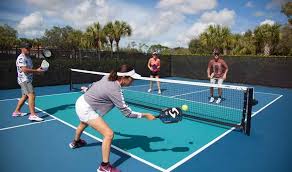
Pickleball is one of the fastest-growing sports in the world, and once you’ve moved beyond beginner skills, the next step is learning how to practice with purpose. Intermediate players often feel “stuck” because they play games but don’t drill enough. The truth is simple: if you want to improve consistency, accuracy, and control, you must add intermediate pickleball practice drills to your weekly routine.
This guide breaks down the 10 best drills designed for the average intermediate player—simple enough for beginners to follow, but effective enough to help you reach 4.0 and beyond. Each drill focuses on a key area: footwork, dinking, third-shot drops, transitions, hand-speed, and kitchen control.
Whether you drill with a partner or solo, these exercises will elevate your performance and help you play smarter, faster, and more confidently.
Why Drilling Matters at the Intermediate Level
Intermediate players often know the basics—serves, returns, dinks, and volleys—but still struggle with timing, shot selection, resets, and consistency. Drilling helps solve these issues by:
- Improving muscle memory
- Training controlled footwork
- Reducing unforced errors
- Strengthening your kitchen line control
- Increasing hand-speed and reaction timing
- Boosting pickleball doubles strategy awareness
If you drill even 20–30 minutes before playing games, you will see improvement faster than someone who only plays.
1. Cross-Court Dinking Drill (The Foundation of Control)
Skill focus: consistency, accuracy, soft hands
Keywords used: cross court dinking drill, accuracy and placement drills, kitchen line control
Cross-court dinking is the single most important intermediate drill. Most dink rallies in real games happen diagonally, so you must learn how to control height, depth, and pace.
How to do it:
- Stand at your kitchen line, opposite your partner at a diagonal.
- Keep all dinks aimed cross-court.
- Land the ball in the opponent’s outer third of the kitchen.
- Rally for 50 dinks without an error (switch sides after each error).
Why it works:
The diagonal gives you more court space, trains angles, and builds control under pressure. It also teaches patience—one of the biggest challenges for intermediate players.
2. Third Shot Drop Drill (Mastering Your Soft Game)
Skill focus: touch, height control, neutralizing opponents
Keywords used: third shot drop drill, pickleball consistency training
The third shot drop is the bridge between the baseline and the kitchen. If you want to win more points, you must be able to drop reliably.
How to do it:
- One player starts at the baseline; the other at the kitchen.
- Baseline player performs a series of third-shot drops.
- Kitchen player catches or resets each ball back.
- Switch every 10–15 reps.
Progression:
Try landing 8 out of 10 drops into the kitchen with a soft arc.
Why it works:
It teaches you how to hit a controlled shot even under pressure and helps you approach the net safely.
3. Transition Zone Reset Drill
Skill focus: staying calm in mid-court, neutralizing fast balls
Keywords used: pickleball transition drills
Most intermediate players lose points in the “no man’s land” between baseline and kitchen. This drill teaches you how to reset instead of panicking.
How to do it:
- One player stands at mid-court.
- Partner fires firm balls at their feet.
- Mid-court player practices soft resets into the kitchen.
- Switch roles after 20 balls.
Why it works:
It makes you comfortable in the hardest position on the court and builds composure during fast rallies.
4. Volley Reaction Wall Drill (Solo Drill)
Skill focus: hand-speed, reflexes
Keywords used: volley reaction drills, hand-speed pickleball drills
You don’t need a partner for this one—just a wall.
How to do it:
- Stand 6–8 feet from a wall.
- Volley the ball continuously.
- Keep your paddle in front and use short punches.
- Increase pace over time.
Goal:
Try for 100 continuous volleys.
Why it works:
Fast hands win at the kitchen line. This drill is perfect for improving reaction time without needing a court.
5. Triangle Dinking Footwork Drill
Skill focus: precise footwork, shot variation
Keywords used: pickleball footwork drills
Footwork separates good players from great players. This drill forces controlled movement while maintaining accuracy.
How to do it:
- Place three targets in a triangle inside the kitchen.
- Alternate hitting each target in sequence.
- Move your feet before each shot—no reaching.
Why it works:
It teaches balance, controlled steps, and proper body positioning.
6. Deep Return + Approach Drill
Skill focus: returns, positioning, strategy
Keywords used: pickleball doubles strategy
This simulates a realistic point scenario.
How to do it:
- One player serves.
- Returning player hits deep to the corner.
- Returner immediately approaches the kitchen line.
- Play out the rally point-to-point.
Why it works:
Intermediate players often forget to advance quickly. This drill trains you to take the kitchen early and dominate.
7. Two-Bounce Reset Drill
Skill focus: soft hands, defensive play
Keywords used: pickleball consistency training
This drill trains you to reset fast, off-balance balls.
How to do it:
- Hard feeder sends fast balls.
- Receiver must let the ball bounce twice—soft resetting it upward and into the kitchen.
- Alternate roles.
Why it works:
If you can handle speed calmly, you’ll win most hand battles.
8. Partner Speed-Up Reading Drill
Skill focus: anticipation, smart aggression
Keywords used: volley reaction drills, kitchen line control
Intermediate players begin learning when to attack. This drill teaches timing.
How to do it:
- Start dinking cross-court.
- One player randomly speeds up the ball.
- Partner blocks or counters.
- Reset to dinking again.
Why it works:
You learn to read body language and avoid attacking at bad moments.
9. Down-the-Line Accuracy Drill
Skill focus: precision, control
Keywords used: accuracy and placement drills
Accuracy wins more games than power.
How to do it:
- Place a target near the sideline.
- Hit 20 dinks or drives at the target.
- Count your percentage.
Why it works:
Intermediate players must learn to move the ball intentionally instead of hitting “anywhere.”
10. 2-on-1 Pressure Drill (Advanced Intermediate)
Skill focus: endurance, focus, strategic placement
Keywords used: pickleball consistency training, pickleball doubles strategy
This is one of the top progression drills.
How to do it:
- Two players rally against one.
- The solo player must aim deep, use soft resets, and avoid errors.
- Switch every 3–4 minutes.
Why it works:
If you can hold your own against two players, you’ll dominate standard rallies easily.
How Often Should Intermediate Players Drill?
Here’s a simple routine:
| Skill | Minutes |
|---|---|
| Dinking | 10–12 |
| Third-shot drops | 10 |
| Transition resets | 5–7 |
| Volleys & hand-speed | 5–8 |
| Accuracy drills | 5 |
Total: 30–40 minutes per session
Do this 3× per week and you’ll see real improvement.
Final Thoughts: Drilling is the Fastest Way to Level Up
You don’t need fancy equipment, a coach, or a high-level partner. With the intermediate pickleball practice drills in this guide, you’ll improve:
✔ consistency
✔ accuracy
✔ footwork
✔ resets
✔ dinking control
✔ hand-speed
✔ transition confidence
If you stay patient and drill with purpose, you will quickly move from intermediate to advanced—and even 4.0+—much faster than players who only play games.
