
Introduction
Quentin Tarantino stands as one of the most influential auteurs in modern cinema — a filmmaker whose style reshaped storytelling, genre conventions, and indie film success in Hollywood. While Wikipedia’s filmography and IMDb’s listing provide baseline data, they often lack nuance, deep analysis, behind-the-scenes context, and updates on emerging projects that matter to enthusiasts, scholars, and search users. (Wikipedia)
In this article, we go well beyond simple film lists and credits. We uncover patterns in Tarantino’s work, overlooked credits, his unique creative philosophy, his acting roles, collaborations, critical impact, and what lies ahead — including his transition into novels, his scrapped final film, and his return to acting in 2025.
1. The Core Filmography (Directed Features)
Wikipedia lists ten feature films directed by Tarantino, along with shorts and television episodes. However, this is only the beginning of the story. (Wikipedia)
1.1 Feature Films Directed
- Reservoir Dogs (1992) — Tarantino’s debut that established his voice: nonlinear narrative, sharp dialogue, and stylized violence. (Wikipedia)
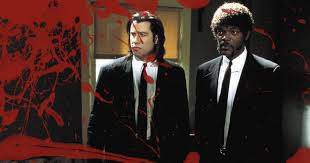
- Pulp Fiction (1994) — The cultural touchstone that brought indie film style to the mainstream. (Encyclopedia Britannica)
- Jackie Brown (1997) — A homage to blaxploitation that showed QT’s versatility. (Wikipedia)
- Kill Bill: Volume 1 (2003) & Volume 2 (2004) — Together a single revenge epic blending samurai cinema and spaghetti westerns. (Wikipedia)
- Death Proof (2007) — QT’s segment in Grindhouse that celebrates exploitation cinema. (Wikipedia)
- Inglourious Basterds (2009) — A revisionist war epic. (Wikipedia)
- Django Unchained (2012) — Western epic tackling slavery and vengeance. (Wikipedia)
- The Hateful Eight (2015) — A chamber piece that blends mystery with historical tension. (Wikipedia)
- Once Upon a Time in Hollywood (2019) — An ode to 1960s Hollywood and the stuntman’s perspective. (Wikipedia)
2. Roles Beyond Directing
Both Wikipedia and IMDb list credits, but rarely discuss the significance of Tarantino’s behind-the-camera contributions and cameo roles.
2.1 Writing & Production Contributions
Tarantino’s writing credits extend beyond his own films:
- True Romance (1993) — Written by Tarantino, directed by Tony Scott. (Wikipedia)
- Natural Born Killers (1994) — (Story credit) rewritten by Oliver Stone. (Wikipedia)
- From Dusk Till Dawn (1996) — Tarantino wrote the screenplay for the vampire crime film directed by Robert Rodriguez. (Wikipedia)
These works show Tarantino’s influence spreading into different genres and collaborations.
2.2 Acting & Cameos
Tarantino appears in numerous films — from Pulp Fiction (as Jimmie) to From Dusk Till Dawn (as Richie Gecko) and even Little Nicky and Desperado. (Wikipedia)
What’s Often Overlooked
- Tarantino’s roles in documentary films about cinema (e.g., Z Channel: A Magnificent Obsession) reveal his deep cinephilia and intellectual contributions to film culture. (Wikipedia)
3. Television and Episodic Work
Most sources mention TV credits only in passing. Tarantino’s directing of a CSI: Crime Scene Investigation episode (“Grave Danger”) earned him an Emmy nomination — a noteworthy milestone often glossed over. (Wikipedia)
4. Upcoming & Scrapped Projects — The Fuller Story
Wikipedia and IMDb list past works but aren’t always current with projects in development or cancelled ideas.
4.1 The Adventures of Cliff Booth
An upcoming comedy-drama film written by Tarantino and directed by David Fincher, centered on Brad Pitt’s character from Once Upon a Time in Hollywood. (Wikipedia)
4.2 Only What We Carry (2025)
Tarantino returns to acting with a major role — his most significant in decades — in Only What We Carry. (Wikipedia)
4.3 The Movie Critic — Scrapped Final Film
Tarantino publicly abandoned his planned 10th film, The Movie Critic, citing creative doubts and a desire to avoid redundancy with his previous work — an important update missed by static filmographies. (The Guardian)
5. Creative Style & Patterns
Neither Wikipedia nor IMDb synthesize why Tarantino’s films resonate. Here’s a deeper look:
5.1 Nonlinear Storytelling
From Reservoir Dogs to Pulp Fiction, Tarantino uses fractured timelines to build tension and character depth — a key signature that changed how stories are told in contemporary cinema.
5.2 Genre Blending
Tarantino’s films defy categories: Westerns meet Blaxploitation meet Martial Arts meet Noir. The result is films that feel both familiar and startlingly fresh.
5.3 Dialogue & Pop Culture
His scripts are filled with conversations that feel real — whether about Big Kahuna Burgers or the films of Bruce Lee — and this has become a defining element of his brand.
6. Awards, Recognition & Legacy
A simple filmography doesn’t capture Tarantino’s cultural impact:
- Palme d’Or for Pulp Fiction at Cannes. (Encyclopedia Britannica)
- Multiple Academy Award nominations & wins (Best Original Screenplay, Director). (Encyclopedia Britannica)
- Influence on generations of directors, screenwriters, and editors.
7. Common Misconceptions Corrected
Many fans and sources inadvertently spread confusion:
Misconception #1: Kill Bill is Two Films
While released as Vol. 1 and Vol. 2, Tarantino always intended them as a single unified work — Kill Bill: The Whole Bloody Affair. (Wikipedia)
Misconception #2: Tarantino Has Already Made 10 Films
Counting methodology matters: depending on whether Kill Bill counts as one and how compilations like Death Proof are treated, some lists vary. (reddit.com)
Misconception #3: His Career Is Ending
Although Tarantino has discussed retirement after ten films, his evolving plans, novel writing, and collaborations indicate a broader, ongoing creative journey.
Conclusion
Quentin Tarantino is more than a list of films — he’s a creative force whose influence is woven into global cinema. While Wikipedia and IMDb are excellent starting points, they don’t give the full picture: his creative philosophy, unrealized projects, rare roles, or ongoing evolution as an artist.
