
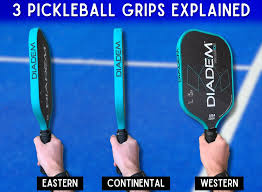
To grip a pickleball paddle correctly, use the Continental grip, holding the paddle like you’re shaking hands with it, with your index knuckle resting on the second bevel of the handle. This neutral grip allows smooth transitions between forehand and backhand, better control at the net, and consistent shots for beginners and advanced players alike.
Why Your Pickleball Grip Matters More Than You Think
Your grip is the only connection between you and the paddle. A poor grip leads to:
- Mishits and pop-ups
- Weak volleys and backhands
- Wrist tension and arm fatigue
- Inconsistent shot placement
The right grip simplifies the game—especially for beginners—by allowing you to hit every basic shot without constantly adjusting your hand.
What Is the Best Grip for Pickleball?
The Continental Grip (The Gold Standard)
The Continental grip is the most widely recommended grip in pickleball because it works for:
- Dinks
- Volleys
- Serves
- Returns
- Drives
- Resets and blocks
Why beginners should use it:
It eliminates confusion. You don’t need to think about changing grips mid-rally, which keeps your reactions faster and your shots more reliable.
How to Find the Continental Grip (Step-by-Step)
Step 1: Understand the Bevels
Pickleball handles have 8 flat sides (bevels).
- Bevel 1: Top flat surface
- Bevel 2: Top-right edge (for right-handed players)
Step 2: Start With the Paddle Face
Place your hand flat on the paddle face (strings area), fingers spread.
Step 3: Slide Down Naturally
Slide your hand down to the handle as if you’re shaking hands with the paddle.
Step 4: Check Your Knuckle
Your index finger knuckle should rest on Bevel 2 (right-handers).
Step 5: Wrap Your Thumb
Your thumb should wrap around the handle—not sit flat along the side.
How Tight Should You Grip a Pickleball Paddle?
Grip pressure should be relaxed but controlled.
Think:
- 4/10 pressure at the kitchen
- 6/10 pressure on serves and drives
Too tight:
- Kills touch
- Reduces wrist mobility
- Causes fatigue
Too loose:
- Paddle twists on contact
- Loss of control
💡 Most power in pickleball comes from technique, not squeezing harder.
Where Should Your Hand Sit on the Handle?
For most players:
- Leave ½ to 1 inch of handle exposed at the bottom
- Don’t choke up too high unless volleying under pressure
Holding the paddle slightly lower:
- Increases leverage
- Improves wrist snap
- Adds effortless power
Should Beginners Change Grips for Different Shots?
No.
Beginners should use one grip—the Continental—for nearly everything.
Constant grip changes:
- Slow reaction time
- Increase errors
- Cause confusion at the net
Once fundamentals are solid, advanced players may adjust slightly on serves or heavy forehands—but it’s not required to play well.
Common Pickleball Grip Mistakes (and How to Fix Them)
1. The “Frying Pan” Grip
Problem: Paddle face opens too much
Fix: Rotate your hand slightly clockwise (righties) to find Bevel 2
2. Death Grip
Problem: Stiff shots, poor touch
Fix: Relax fingers, keep pressure in fingertips—not palm
3. Thumb on the Side
Problem: Weak backhands
Fix: Wrap thumb fully around handle for stability
4. Choking Up Too High
Problem: Less power, cramped swings
Fix: Slide hand slightly lower for leverage
Is the Continental Grip Good for Dinking?
Yes—the Continental grip is ideal for dinking.
It allows:
- Soft hands
- Paddle face control
- Easy backhand dinks without grip changes
Most dink errors come from gripping too tightly, not from the grip itself.
Best Grip for Serving in Pickleball
For beginners, the Continental grip is more than enough for:
- Consistent serves
- Legal motion
- Directional control
Advanced players may rotate slightly toward an Eastern grip for topspin, but consistency always matters more than spin early on.
What About Two-Handed Backhands?
If you use a two-handed backhand:
- Bottom hand: Continental grip
- Top hand: Light Eastern-style support
Your dominant hand grip should not change.
Does Grip Size Affect How You Hold the Paddle?
Absolutely.
If the grip is:
- Too small → Overgripping, wrist strain
- Too large → Limited wrist movement
Quick test:
You should fit one finger width between your palm and fingertips when gripping the paddle.
Adding an overgrip is an easy fix if the handle feels too small.
10 Common Pickleball Grip Questions (Answered)
1. What is the best grip for beginners in pickleball?
The Continental grip—it’s versatile, simple, and forgiving.
2. Should I switch grips during a rally?
No. Stick with one grip for consistency.
3. Why does my wrist hurt after playing?
Likely gripping too tightly or using the wrong grip size.
4. Is the Continental grip good for backhands?
Yes—it’s especially helpful for one-handed backhands.
5. How do I stop popping the ball up?
Relax your grip and keep the paddle face neutral.
6. Can I use a tennis grip in pickleball?
Tennis players often start Eastern—but Continental works better long-term.
7. Should my index finger be separated?
A slight separation improves control—don’t exaggerate it.
8. Is the Western grip ever used in pickleball?
Rarely. It limits touch and wrist mobility.
9. Does grip affect spin?
Yes—but technique matters far more than grip choice.
10. How often should I replace my overgrip?
Every 10–15 hours of play or when it feels slippery.
Final Thoughts: Keep It Simple, Play Better
The correct pickleball grip isn’t complicated—but it is essential. By using the Continental grip, relaxing your hand, and avoiding unnecessary grip changes, you’ll improve faster, make fewer errors, and enjoy the game more.
Master the grip first. Everything else gets easier.
