
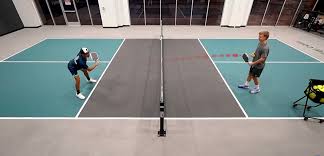
Your pickleball dink goes too high because you’re unintentionally adding power or lift—usually from poor balance, a tight grip, incorrect contact point, or swinging instead of guiding the ball. Most beginners “pop up” dinks not due to lack of touch, but because their body position and paddle mechanics force the ball upward instead of forward.
That’s the short answer.
Now let’s fix it—permanently.
Why Most Articles and Videos Fall Short
Most popular pickleball dink articles and videos repeat the same surface-level advice:
- “Use a soft grip”
- “Don’t swing too big”
- “Stay low”
While correct, they don’t explain why those mistakes happen, when they show up most often, or how to self-diagnose your specific issue.
What’s missing:
- Cause vs. symptom clarity
- Balance and movement timing
- Net-relative contact height
- Decision-making errors, not just mechanics
- Beginner-friendly cues you can feel immediately
This article fills those gaps.
The Real Mechanics Behind a High Dink
A dink should travel forward first, upward second.
When your dink goes too high, one of two things is happening:
- You’re adding lift
- Or you’re late and compensating
Let’s break down the most common hidden causes.
1. You’re Standing Too Tall (Even If You Think You’re Not)
Why it causes high dinks
When your knees are straight:
- Your paddle starts high
- Your swing path goes upward
- Your margin over the net shrinks
Your body forces the paddle to lift the ball instead of push it.
Fix
- Bend your knees until your thighs feel “engaged”
- Keep your chest quiet
- Think “eyes below net tape”, not “bend a little”
Supporting question answered:
Why do my dinks pop up when I get tired?
Because fatigue causes you to stand taller without realizing it.
2. Your Grip Is Too Tight at Contact
Many players start with a soft grip—but tighten right before impact.
Why this matters
A tight grip:
- Reduces paddle forgiveness
- Increases rebound
- Turns touch shots into mini punch volleys
Fix
- Maintain 3/10 grip pressure through contact
- Imagine holding a tube of toothpaste without squeezing it out
Supporting question answered:
Can grip pressure alone cause high dinks?
Yes—especially on faster incoming balls.
3. You’re Swinging Instead of Guiding
A dink is not a hit—it’s a controlled redirect.
Common beginner error
- Backswing goes behind the body
- Follow-through finishes high
- Paddle accelerates through contact
This creates unnecessary lift.
Fix
- Keep the paddle in front of your chest
- Use a short, forearm-led motion
- Finish with the paddle facing your target—not the sky
Supporting question answered:
How big should my dink swing be?
Small enough that someone watching might miss it.
4. Your Contact Point Is Too High
Many players wait too long and hit the ball above net height.
Why this pops the ball up
- Higher contact = less margin
- You instinctively lift to clear the net
- The paddle face opens unintentionally
Fix
- Contact the ball at or below net height
- Move your feet instead of reaching
- Let the ball drop—don’t rush it
Supporting question answered:
Should I take dinks early or let them drop?
Let them drop unless you’re attacking.
5. You’re Reaching Instead of Moving
Reaching shifts your weight backward.
What this does
- Opens the paddle face
- Disrupts balance
- Forces a scooping motion
Fix
- Take one extra step
- Keep your weight slightly forward
- Hit the ball inside your stance, not outside it
Supporting question answered:
Why do my dinks pop up when I’m stretched wide?
Because reaching changes paddle angle and balance.
6. Your Paddle Face Is Too Open
An open paddle face adds loft—even with a soft swing.
Why it happens
- Wrist breaks down
- Grip changes mid-rally
- Panic adjustment near the net
Fix
- Slightly close the paddle face
- Keep your wrist quiet and stable
- Let your legs provide lift, not your wrist
Supporting question answered:
Should my paddle face be open on dinks?
Slightly—but never exaggerated.
7. You’re Using Your Wrist Instead of Your Legs
Wrist flicks feel controlled—but add pop.
Why beginners do this
- Legs feel slow
- Wrist feels precise
- Results are inconsistent
Fix
- Lower your center of gravity
- Push gently upward with your legs
- Keep wrist motion minimal
Supporting question answered:
Is wrist action bad for dinks?
Yes—unless you’re highly advanced and intentional.
8. You’re Dinking Aggressively When Off-Balance
This is a decision-making error, not a technique issue.
What happens
- You try to be “clever” while moving
- You add pace unintentionally
- The ball floats
Fix
- When off-balance, reset to the middle
- Save aggressive dinks for when you’re stable
Supporting question answered:
When should I hit aggressive dinks?
Only when balanced and set.
9. You’re Aiming Too Close to the Net
Ironically, aiming low often causes higher shots.
Why
- Fear of the net triggers lift
- Micro-adjustments add arc
- Tension increases
Fix
- Aim 3–4 feet inside the kitchen
- Let margin, not precision, keep the ball low
Supporting question answered:
Where should I aim my dinks?
Deep into the kitchen, not just over the tape.
10. You’re Reacting Instead of Anticipating
Late reactions cause rushed mechanics.
Fix
- Split step before each dink
- Read your opponent’s paddle face
- Prepare early so you don’t compensate late
Supporting question answered:
Why do my dinks get worse in fast rallies?
Because late preparation forces rushed lifts.
A Simple Self-Diagnosis Drill
Next time your dink goes too high, ask:
- Was I balanced?
- Was my grip soft at contact?
- Did I move my feet?
- Did I swing or guide?
- Was my paddle face quiet?
You’ll usually find the answer immediately.
Key Takeaway
Your dink doesn’t go too high because you lack touch—it goes high because your body position, balance, or timing forces the paddle to lift the ball. Fixing your stance, contact point, and decision-making will lower your dinks faster than any “soft hands” drill ever will.
Master those, and your opponents will stop attacking your dinks—and start popping theirs up instead.
