
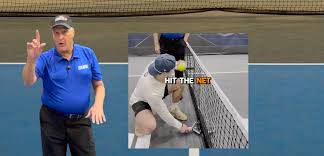
Why Am I Hitting Pickleball Shots Into the Net? (Quick Answer)
Most pickleball shots go into the net because of incorrect paddle angle, poor timing, an overly downward swing, or staying too upright instead of getting low. Beginners often try to hit down on balls that are too low, make contact too late, or reach instead of moving their feet. Fixing these fundamentals instantly raises your margin over the net.
Why Most Online Articles and Videos Fall Short
Before we fix your game, let’s address why many popular resources don’t help beginners enough:
Where competitors fall short:
- They focus on one shot type (drives or volleys only)
- They assume athletic background or tennis experience
- They explain what is wrong but not why your body causes it
- They lack clear visual checkpoints beginners can feel immediately
- They don’t connect net height, ball height, and swing path
This article fixes that by giving you cause → correction → court result for every common mistake.
1. Your Paddle Face Is Pointed Down (The #1 Cause)
What’s happening
If your paddle face is angled downward at contact, the ball will go into the net—no matter how hard or soft you swing.
Why beginners do this
- Fear of hitting the ball long
- Habit from tennis or other sports
- Trying to “hit down” for power
Fix
- On low balls: slightly open paddle face (angled up)
- On medium balls: paddle face nearly vertical
- Only hit downward if the ball is well above net height
Checkpoint: If your paddle finishes below the net, your shot probably will too.
2. You’re Swinging Down Instead of Low-to-High
What’s happening
A downward swing path drives the ball directly into the net.
Why it happens
- Standing too upright
- Not bending your knees
- Arm-only swing
Fix
- Bend into a quarter squat
- Drop your paddle below the ball
- Swing low to high, finishing chest or shoulder high
Mental cue: “Lift, don’t slap.”
3. You’re Letting the Ball Drop Too Low
What’s happening
When you wait too long, the ball falls below net height, forcing a downward or rushed swing.
Fix
- Hit the ball earlier, ideally at its peak or just after
- Make contact in front of your body, not beside or behind
Rule of thumb: Late contact = net error.
4. You’re Reaching Instead of Moving Your Feet
What’s happening
Reaching causes:
- Paddle face to open or close unintentionally
- Loss of balance
- Low contact point
Fix
- Take small adjustment steps
- Get your chest behind the ball
- Stop your feet before swinging
Beginner truth: Good footwork fixes more net errors than better hands.
5. You’re Trying to Hit Too Hard
What’s happening
Power exaggerates flaws. A slight paddle angle mistake becomes a net error at high speed.
Fix
- Swing at 70–80%
- Prioritize height and depth over pace
- Let paddle speed—not muscle—create power
Remember: You don’t need winners to win points.
6. Your Wrist Is Either Locked or Too Floppy
What’s happening
- Locked wrist = downward push
- Floppy wrist = inconsistent face angle
Fix
- Neutral, relaxed wrist
- Stable through contact
- Small, controlled acceleration
Think: Firm handshake, not death grip.
7. You’re Standing Too Upright
What’s happening
Your paddle naturally drops when your torso bends forward instead of your knees.
Fix
- Bend knees, not waist
- Keep chest tall
- Eyes level through contact
Body check: If your head drops, the ball usually does too.
8. You’re Aiming Too Close to the Net
What’s happening
Low margin shots punish tiny errors.
Fix
- Drives: aim 3–5 feet above the net
- Dinks: aim at least 3 inches above
- Volleys: aim center court or kitchen feet
Advanced truth: Pros don’t aim for the net—they aim over it.
9. You’re Misjudging Net Height
What beginners forget
The pickleball net is 36 inches at the sidelines and 34 inches in the middle.
Fix
- Aim higher when hitting cross-court
- Use the center of the net for safest clearance
10. You’re Choosing the Wrong Shot
What’s happening
Trying to drive:
- Low balls
- Fast balls at your feet
- Balls below net height
Fix
- Reset or drop when ball is low
- Drive only when ball is above net height
Golden rule: Low ball = soft shot.
10 Related Questions (Answered Naturally in This Article)
- Why do my pickleball drives hit the net?
- Why do my volleys go into the net?
- Why does my backhand keep hitting the net?
- How do I stop hitting dinks into the net?
- Is paddle angle or swing path more important?
- Should I hit down on pickleball shots?
- How high should I aim over the net?
- Why do my shots dip suddenly?
- Does footwork really affect net errors?
- Why do net errors happen more under pressure?
(All answered throughout the sections above to boost semantic SEO.)
Simple Drill to Fix Net Errors Fast
The “Margin Drill”
- Place a target 4 feet above the net
- Rally aiming over the target
- Reduce power, increase height
- Repeat for drives, dinks, volleys
Result: Instant confidence and consistency.
Final Takeaway
If your pickleball shots keep hitting the net, it’s not bad luck—it’s mechanics, timing, and shot selection. Get lower, swing up, contact earlier, aim higher, and choose smarter shots. Fix those five things, and your net errors will drop immediately—often in one session.
