
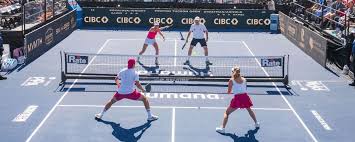
Pickleball is often described as a soft game built on patience and consistency. While that’s partly true, winning consistently requires offense. Many beginners struggle because they either play too defensively or attack at the wrong time.
This guide breaks down offensive pickleball strategies for beginners in a clear, simple, and practical way. You’ll learn how to attack in pickleball without overhitting, where to aim, and when offense actually makes sense.
What Does “Offense” Mean in Pickleball?
Offense in pickleball does not mean hitting the ball as hard as possible.
Instead, offense means:
- Putting pressure on your opponents
- Creating uncomfortable shots
- Forcing pop-ups or weak returns
- Taking advantage of high balls
Great pickleball offense is about placement, timing, and decision-making, not power.
1. Control the Kitchen Line (Your #1 Offensive Goal)
The most important rule in pickleball strategy for beginners is this:
The team that controls the kitchen line usually wins the point.
Why the kitchen line matters
- You can volley the ball early
- You take time away from opponents
- You can attack angles and feet
Beginner tip
Don’t rush the kitchen. Move forward only after a good shot, such as:
- A deep return
- A successful third shot drop
- A weak opponent reply
Once at the kitchen, your offense improves instantly.
2. Attack the Feet (High-Percentage Offense)
One of the safest pickleball offensive tips is attacking your opponent’s feet.
Why this works
- Forces opponents to hit upward
- Creates pop-ups
- Prevents aggressive counterattacks
When to use it
- On volleys at the kitchen line
- On third shot drives
- When opponents are moving or off balance
This is especially effective in pickleball doubles offense, where body positioning matters more than speed.
3. Know When to Attack in Pickleball (Very Important)
Beginners often lose points because they attack the wrong ball.
✅ Good balls to attack:
- Balls above net height
- Floaty returns
- High dinks
- Short balls in the transition zone
❌ Balls NOT to attack:
- Low dinks
- Fast balls at your feet
- Shots below the net
Rule of thumb:
👉 Attack high balls. Reset low balls.
This single concept will dramatically reduce errors.
4. Use the Third Shot Drive Strategically
The third shot drive strategy is a powerful offensive tool for beginners when used correctly.
What is it?
A hard, controlled shot hit after the return of serve.
When it works best
- Against players who struggle with fast balls
- When opponents stay back
- When you can aim at feet or backhand
Beginner mistake to avoid
Driving every third shot. Mix drives with drops to stay unpredictable.
5. Offensive Dinking in Pickleball (Yes, Dinks Can Attack)
Many beginners think dinking is defensive. That’s wrong.
Offensive dinking in pickleball means:
- Applying pressure with placement
- Using angles
- Forcing mistakes
Offensive dink targets
- Opponent’s backhand
- Sideline angles
- Feet near the kitchen line
You don’t need spin to be effective—precision beats flash.
6. Take the Ball Out of the Air
One habit that separates beginners from intermediate players is volleying instead of letting the ball bounce.
Why this is offensive
- Reduces opponent reaction time
- Keeps pressure constant
- Prevents reset opportunities
Start with:
- Simple punch volleys
- Compact swings
- Controlled placement
At the pickleball kitchen line offense, this is a major advantage.
7. Target the Backhand (Beginner-Friendly Strategy)
Most players—especially beginners—have weaker backhands.
Smart offensive targets:
- Backhand volleys
- Backhand returns
- Inside foot on the backhand side
This is one of the easiest aggressive pickleball strategies that doesn’t require extra skill.
8. Use Depth to Create Offense
Depth is a hidden offensive weapon.
Deep shots:
- Push opponents back
- Limit attack angles
- Create short replies
This applies to:
- Serves
- Returns
- Groundstrokes
A deep ball followed by a short one is a classic offensive pattern.
9. Play Offense as a Team (Doubles Awareness)
In pickleball doubles offense, teamwork matters more than individual shots.
Key ideas
- Move forward together
- Avoid leaving the middle open
- Communicate on speed-ups
A coordinated team creates more pressure than two aggressive individuals.
10. Common Beginner Offensive Mistakes
Avoid these traps:
❌ Attacking every ball
❌ Swinging too hard
❌ Speeding up low dinks
❌ Ignoring positioning
❌ Chasing winners instead of forcing errors
Remember: Most points are won by mistakes, not winners.
Simple Offensive Game Plan for Beginners
Here’s a beginner-friendly plan you can use immediately:
- Hit deep returns
- Use third shot drops or controlled drives
- Move to the kitchen line
- Attack high balls only
- Aim at feet or backhands
- Reset when under pressure
This approach works at recreational and competitive levels.
Final Thoughts
Learning offensive pickleball strategies for beginners doesn’t mean becoming reckless or overpowering opponents. True offense comes from smart decisions, positioning, and patience.
If you focus on:
- Controlling the kitchen
- Attacking the right balls
- Applying pressure instead of force
You’ll win more points—and enjoy the game more.
