
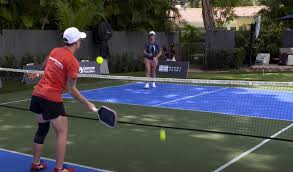
The third shot drop is one of the most important — and most frustrating — shots in pickleball. For many beginners, it feels impossible to control, especially without a partner to practice with. The good news? You can learn and improve the third shot drop entirely on your own.
This guide will walk you through third shot drop drills without a partner, using simple setups you can do at a pickleball court, against a wall, or even at home. Whether you’re brand new or stuck at the 3.0–3.5 level, these solo drills will help you build touch, consistency, and confidence.
What Is the Third Shot Drop (Beginner Explanation)
The third shot drop is a soft shot hit from the baseline that lands gently in your opponent’s kitchen (non-volley zone). Its purpose is to:
- Neutralize your opponents’ net advantage
- Give you time to move forward
- Start a dink rally instead of a fast exchange
For beginners, the challenge isn’t understanding what the shot is — it’s learning how to control it.
That’s where solo drills come in.
Why Practice Third Shot Drop Drills Without a Partner?
Many players believe you need a drilling partner to improve. That’s not true.
Benefits of Solo Pickleball Drills
- Practice anytime, no scheduling required
- Repeat shots without pressure
- Focus purely on technique
- Faster muscle memory development
If you’re wondering how to practice third shot drop alone, solo drills are actually one of the most efficient ways to improve.
Key Technique for Third Shot Drop (Before Drilling)
Before starting drills, lock in these fundamentals:
1. Grip Pressure
- Use a loose grip (2–3 out of 10)
- Tension causes balls to sail long
2. Contact Point
- Hit the ball below knee height
- Contact should be in front of your body
3. Swing Motion
- Smooth, slow swing
- Think “push” not “hit”
4. Weight Transfer
- Move weight forward, not backward
These basics apply to every third shot drop drill for beginners.
Drill 1: Self-Drop Third Shot Drill (No Court Needed)
Best for: Beginners learning touch
Location: Court, driveway, or backyard
How to Do It
- Stand near the baseline
- Drop the ball with your non-paddle hand
- Let it bounce
- Hit a soft shot aiming for the kitchen
Focus Points
- Smooth swing
- High arc
- Relaxed grip
Why It Works
This drill removes pace and lets you focus entirely on feel, which is crucial for third shot drop consistency drills.
Drill 2: Kitchen Target Drop Drill
Best for: Accuracy & consistency
Location: Pickleball court
Setup
- Place cones, towels, or water bottles in the kitchen
- Aim for the middle first, then corners
How to Score
- 1 point for landing in the kitchen
- 2 points for landing near target
- First goal: 10 points in a row
Progression
- Alternate forehand and backhand
- Narrow your target area
This drill directly improves pickleball third shot drop at home or court settings.
Drill 3: Wall Drill for Third Shot Drop Control
Best for: Hand feel & trajectory
Location: Any wall
How to Do It
- Stand 10–15 feet from a wall
- Hit soft shots so the ball:
- Hits the wall
- Bounces back low
- Control height and softness
Advanced Version
- Draw a “net line” on the wall
- Ball must clear line but stay low
Wall drills are excellent pickleball wall drills for third shot drop training.
Drill 4: Arc Control Drill (Height Awareness)
Best for: Preventing balls into the net
Setup
- Imagine a rainbow arc
- Ball should peak above net height but drop quickly
How to Practice
- Hit 20 drops focusing only on arc
- Ignore accuracy at first
Why This Matters
Most beginners hit third shot drops too flat, causing net errors. Arc control fixes that fast.
Drill 5: Footwork + Drop Drill (Solo)
Best for: Game realism
How to Do It
- Start behind baseline
- Self-feed or toss the ball
- Hit the drop
- Take 3–5 steps forward
- Reset and repeat
This builds third shot drop footwork drill habits used in real matches.
Common Third Shot Drop Mistakes (And Fixes)
Mistake 1: Hitting Too Hard
Fix: Slow your swing, loosen grip
Mistake 2: Leaning Back
Fix: Weight forward, paddle finishes toward target
Mistake 3: Low Net Clearance
Fix: Increase arc, hit ball earlier
Mistake 4: No Consistency
Fix: Repetition with solo drills
Understanding third shot drop common mistakes helps drills work faster.
15-Minute Solo Third Shot Drop Practice Plan
Beginner Practice Routine
- 5 min – Self-drop drill
- 5 min – Target kitchen drill
- 5 min – Wall control drill
Goal
- Consistency over power
- Track improvement weekly
This simple third shot drop practice plan fits any schedule.
When to Use Third Shot Drop vs Drive
As a beginner:
- Use drop against players at the net
- Use drive only on high, attackable balls
Drilling both is helpful, but mastering the drop first creates better long-term success.
Final Thoughts: You Don’t Need a Partner to Improve
Practicing third shot drop drills without a partner is not just possible — it’s one of the smartest ways to improve as a beginner. Solo drills allow you to slow the game down, build touch, and gain confidence without pressure.
Stick with these drills, focus on fundamentals, and you’ll notice fewer net errors, better transitions, and more control in real matches.
