
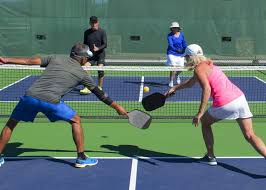
Quick reactions at the net are one of the biggest differences between beginner and confident pickleball players. If you feel late on volleys, jammed by fast shots, or overwhelmed during hand battles, you’re not alone.
The good news? Reaction speed can be trained.
In this guide, you’ll learn the best pickleball volley reaction drills designed specifically for beginners. These drills improve hand speed, reflexes, and confidence at the kitchen line—without requiring advanced skills or expensive equipment.
Why Reaction Speed Matters in Pickleball Volleys
At the non-volley zone (kitchen line), the ball travels fast and reaction time is short. Big swings don’t work here. Instead, success depends on:
- Paddle readiness
- Short, compact movements
- Quick decision-making
- Balanced footwork
That’s why pickleball reflex volley drills are essential for players who want to win more net exchanges.
Key Technique Before You Start
Before jumping into drills, lock in these fundamentals:
- Light grip pressure (think 3–4 out of 10)
- Paddle up and in front
- Quiet wrist
- Short punch motion
- Stay on the balls of your feet
These fundamentals are repeated throughout all effective pickleball fast hands drills.
1. Wall Reaction Volley Drill (Solo)
Best for: Solo practice and quick reflexes
Keywords used: wall drills for pickleball volleys, solo pickleball volley drills
How to do it:
- Stand 5–7 feet from a wall
- Hit a soft volley into the wall
- React quickly and volley it back
- Keep swings short and controlled
Focus:
- Eye tracking
- Paddle control
- Fast reactions
⏱️ Do this for 2–3 minutes daily.
2. Close-Range Partner Volley Drill
Best for: Beginner confidence at the net
Keywords used: partner volley drills pickleball
How to do it:
- Stand closer than the kitchen line (practice only)
- Gently volley back and forth
- Aim for consistency, not power
Why it works:
Being closer forces faster reactions. When you return to normal distance, the game feels slower.
3. Alternating Forehand and Backhand Volleys
Best for: Balanced reactions
Keywords used: pickleball volley drills for beginners
How to do it:
- Partner feeds alternating forehand/backhand volleys
- Reset paddle to center after every hit
Coaching tip:
Don’t guess. React to the ball and move your feet, not just your arms.
4. Popcorn Drill (Beginner Version)
Best for: Hand speed and coordination
Keywords used: pickleball net play drills
How to do it:
- Volley continuously while stepping backward every 10 hits
- Start close, finish at the kitchen line
This drill builds confidence and reinforces compact technique.
5. Two-Ball Reaction Drill (Modified for Beginners)
Best for: Improving reaction time in pickleball
Keywords used: how to improve reaction time in pickleball
How to do it:
- Partner feeds one ball, then immediately feeds another
- Focus on recovery between shots
Beginner adjustment:
Start slow. Speed up only after control improves.
6. Paddle Tap Reaction Drill
Best for: Hand speed exercises
Keywords used: pickleball hand speed exercises
How to do it:
- Partner taps your paddle left or right
- You react and tap back
- Then progress to volley feeds
This primes your nervous system before real drills.
7. Kitchen Line Soft Volley Drill
Best for: Control under pressure
Keywords used: pickleball kitchen line drills
How to do it:
- Stand at the kitchen line
- Volley softly, aiming for consistency
- Keep the ball low
Soft hands create faster recovery and better reactions.
8. Rapid Fire Feed Drill
Best for: Match-like speed
Keywords used: pickleball reflex volley drills
How to do it:
- Partner feeds quick but controlled volleys
- Focus on blocking, not swinging
Think “catch and push,” not “hit.”
9. Figure-8 Volley Drill
Best for: Paddle control and angles
How to do it:
- Volley crosscourt forehand
- Then backhand
- Repeat in a figure-8 pattern
This improves anticipation and footwork.
10. 5-Minute Daily Reaction Routine
Best for: Busy beginners
Routine example:
- 2 min wall drill
- 2 min close-range volleys
- 1 min alternating forehand/backhand
Consistency beats long sessions.
Common Mistakes Slowing Your Reactions
Avoid these beginner errors:
- Gripping the paddle too tight
- Taking big swings
- Standing flat-footed
- Letting paddle drop below chest
- Overhitting instead of blocking
Fixing these alone can dramatically improve reaction time.
How Often Should Beginners Practice Volley Drills?
- 3–5 times per week
- Short sessions (5–15 minutes)
- Quality > quantity
Even elite players rely on simple drills to keep reactions sharp.
Final Thoughts
Fast hands at the net aren’t a talent—you build them through repetition and proper technique. These pickleball volley reaction drills are designed to help beginners feel confident, calm, and controlled during fast exchanges.
Start slow, stay relaxed, and focus on clean contact. Over time, the ball will feel slower, your reactions quicker, and your net game stronger.
