
If you’re new to pickleball, one of the most confusing parts isn’t hitting the ball—it’s understanding what everyone is saying. Words like kitchen, dink, side out, or Erne can sound strange if you’ve never played before.
This guide breaks down pickleball terminology explained for beginners in plain English. No complicated rules. No technical jargon. Just clear explanations with real-game examples so you can step onto the court with confidence.
Why Learning Pickleball Terms Matters
Pickleball is a very social sport. Players talk constantly during games, especially in doubles. Knowing pickleball terms for beginners helps you:
- Understand rules faster
- Avoid common mistakes
- Communicate better with partners
- Feel confident at open play
Think of pickleball vocabulary as the language of the game—once you learn it, everything makes sense.
Pickleball Court Terms Explained
Let’s start with the court itself. These terms come up in almost every game.
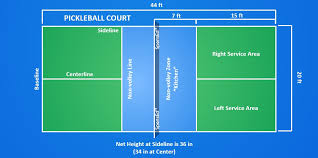
Baseline
The baseline is the back line of the court. All serves must be hit from behind this line.
Beginner tip: Keep both feet behind the baseline when serving.
Sideline
The sidelines run along the length of the court. If the ball lands outside them, it’s out.
Centerline
The centerline divides the service court into left and right sections. It helps determine where you serve and receive.
Kitchen (Non-Volley Zone)
The kitchen, officially called the Non-Volley Zone (NVZ), is the 7-foot area on both sides of the net.
You cannot volley (hit the ball in the air) while standing in the kitchen.
➡️ This is one of the most important pickleball kitchen rules explained for beginners.
No Man’s Land
This is the area between the kitchen and the baseline. It’s not an official term, but players use it often.
Why it’s bad: You’re too far to dink and too close to defend hard shots.
Pickleball Shots Explained Simply
Shots are where pickleball gets fun—and confusing.
Dink
A dink is a soft shot that lands in your opponent’s kitchen.
What does dink mean in pickleball?
It means control, not power. Dinking helps you win rallies at the net.
Drive
A drive is a hard, fast shot hit with power, usually from the baseline.
Beginner note: Drives are tempting, but overusing them leads to errors.
Drop Shot (Third-Shot Drop)
A drop shot is a soft shot that lands in the kitchen.
The third-shot drop is hit by the serving team after the return, allowing them to move to the net.
Lob
A lob is a high shot hit over your opponent’s head, forcing them back.
Volley
A volley means hitting the ball in the air before it bounces.
⚠️ You cannot volley while standing in the kitchen.
Groundstroke
A groundstroke is any shot hit after the ball bounces.
Pickleball Rules Terminology Beginners Must Know
Understanding rules vocabulary prevents arguments and confusion.
Fault
A fault is any rule violation, such as:
- Hitting the ball out
- Volleying in the kitchen
- Serving into the net
Side Out
A side out means the serving team loses the serve, and the other team gets to serve.
Double Bounce Rule
After the serve:
- The receiving team lets the ball bounce
- The serving team lets the return bounce
Only after that can volleys happen.
➡️ This is a core part of pickleball rules terminology.
Let
A let is a replayed point, usually due to interruption or a serve hitting the net and landing in.
Pickleball Scoring Terms Explained
Scoring confuses many beginners at first.
Server Number
In doubles, the score is called as:
Server score – Receiver score – Server number
Example: 5–3–1
Ace
An ace is a serve that the opponent does not touch.
Rally
A rally is the sequence of shots until a point ends.
Golden Pickle
Winning a game 11–0 as the first serving team.
Pickleball Slang for Beginners
These are informal but commonly used terms.
Dinker
A player who prefers soft shots and strategy.
Banger
A player who hits hard, powerful shots all the time.
Poach
In doubles, when a player crosses into their partner’s area to hit a ball.
Stack
A doubles strategy where players stay on one side of the court to maintain forehand positioning.
Advanced Terms You’ll Hear (But Don’t Need Yet)
You don’t need these immediately, but it helps to recognize them.
- Erne – Volleying outside the kitchen by jumping around it
- ATP (Around the Post) – A shot hit outside the net post
- Carry – Illegal shot where the ball is carried on the paddle
Beginner Pickleball Vocabulary: Quick Reference
| Term | Simple Meaning |
|---|---|
| Kitchen | No-volley zone |
| Dink | Soft shot into kitchen |
| Fault | Rule violation |
| Side out | Loss of serve |
| Volley | Hit in the air |
| Drive | Hard shot |
| Drop | Soft setup shot |
Final Tips for Beginners
- Don’t memorize everything at once
- Focus first on kitchen rules and dinking
- Ask questions—pickleball players are friendly
- Play more; terms make sense with experience
Conclusion
Learning pickleball terminology explained for beginners doesn’t have to be overwhelming. Once you understand the basic court areas, shots, rules, and slang, the game becomes far more enjoyable.
Save this guide, revisit it after a few games, and soon you’ll be speaking pickleball fluently—on and off the court.
