
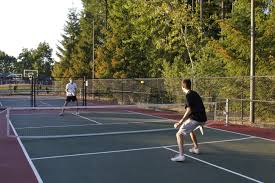
image credit; Wikipedia
Pickleball is one of the fastest-growing sports in the world, and if you’re hearing about it everywhere, you’re not alone. Many beginners ask the same questions: What is pickleball for beginners? Is pickleball easy to learn? Do I need special skills or fitness to start?
The good news is that pickleball was designed to be simple, social, and accessible. Whether you’ve played sports before or not, this guide will walk you through everything you need to know — clearly and without confusing jargon.
What Is Pickleball for Beginners?
Pickleball is a paddle sport that combines elements of tennis, badminton, and table tennis. It’s played with a solid paddle and a lightweight plastic ball with holes, similar to a wiffle ball.
For beginners, pickleball stands out because:
- The court is smaller than a tennis court
- The ball moves slower and stays low
- The rules are easy to learn in one session
You can play pickleball as singles (one-on-one) or doubles (two-on-two), with doubles being the most popular for beginners due to its social and relaxed nature.
Is Pickleball Easy to Learn?
Yes — pickleball is widely considered one of the easiest racket sports to learn.
Most beginners can:
- Start rallying within 10–15 minutes
- Understand the basic rules in one game
- Play competitively within a few sessions
Unlike tennis, pickleball uses underhand serves, and the smaller court means less running. This makes it especially appealing for:
- Older adults
- Complete beginners
- People returning to sport after a break
Pickleball Court Size Explained Simply
A pickleball court is the same size as a doubles badminton court:
- 44 feet long
- 20 feet wide
The net is:
- 36 inches high at the sidelines
- 34 inches high in the center
The Kitchen (Non-Volley Zone)
One unique feature beginners must know is the non-volley zone, commonly called “the kitchen.”
- It extends 7 feet from the net on both sides
- You cannot volley (hit the ball in the air) while standing in this area
This rule prevents players from smashing the ball at the net and keeps the game fair and strategic.
Beginner Pickleball Rules Explained Simply
Here are the essential pickleball rules beginners need to know:
1️⃣ The Serve
- Must be underhand
- Paddle contacts the ball below the waist
- Serve diagonally across the court
- The serve must land past the kitchen line
2️⃣ Double Bounce Rule
After the serve:
- The receiving team must let the ball bounce once
- The serving team must let it bounce once
After these two bounces, players may volley or hit after a bounce.
3️⃣ Scoring
- Only the serving team can score points
- Games are usually played to 11 points
- You must win by 2 points
These beginner pickleball rules keep the game slower, fairer, and easier to control.
Pickleball Equipment for Beginners
You don’t need expensive gear to start playing pickleball.
🏓 Paddle
- Beginner paddles are usually wood or composite
- Lightweight paddles offer better control
⚪ Ball
- Indoor balls: fewer holes, softer
- Outdoor balls: harder, more holes
👟 Shoes
- Court shoes or supportive trainers
- Avoid running shoes with soft soles
🎽 Clothing
- Comfortable athletic wear
- No special uniform required
A basic beginner setup is affordable, which is another reason pickleball is growing so fast.
How to Play Pickleball Step by Step (Beginner Friendly)
Here’s a simple breakdown of how a typical pickleball rally works:
- One team serves underhand
- The ball bounces on the receiving side
- The receiving team returns the ball
- The serving team lets it bounce
- After two bounces, both teams can volley
- The rally continues until a fault occurs
Faults include:
- Hitting the ball out of bounds
- Volleys in the kitchen
- Missing the ball
Once you understand this flow, pickleball becomes very intuitive.
Pickleball vs Tennis for Beginners
Many beginners wonder how pickleball compares to tennis.
Pickleball Advantages for Beginners
- Smaller court = less running
- Underhand serves = easier control
- Slower ball = longer rallies
- Lower injury risk
Tennis Challenges for Beginners
- Overhand serves are difficult
- Larger court requires more stamina
- Steeper learning curve
For beginners, pickleball often feels less intimidating and more enjoyable from day one.
Common Pickleball Mistakes Beginners Make
Avoiding these mistakes can speed up your improvement:
- Standing in the kitchen while volleying
- Trying to smash every shot
- Forgetting the double bounce rule
- Using too much wrist instead of smooth swings
Pickleball rewards patience and placement, not power.
Is Pickleball Good for Older Adults?
Absolutely. Pickleball is one of the most popular sports among older adults, but it’s equally loved by younger players.
Benefits include:
- Low-impact movement
- Improves balance and coordination
- Social interaction
- Mental engagement
Many players continue enjoying pickleball well into their 60s, 70s, and beyond.
Final Thoughts: Why Pickleball Is Perfect for Beginners
Pickleball is easy to learn, affordable, and welcoming. You don’t need a background in sports to enjoy it, and improvement comes quickly with practice.
If you’re looking for a fun way to stay active, meet people, and learn a new skill without pressure, pickleball is an excellent place to start.
Grab a paddle, step onto the court, and enjoy the game — your pickleball journey starts with just one rally.
